
5 MIN READ · Updated Nov 9, 2026
How Long Does It Take to Recover From Varicose Vein Treatment?
Varicose vein treatment can help relieve symptoms such as aching, heaviness and swelling, while improving the appearance of prominent veins...
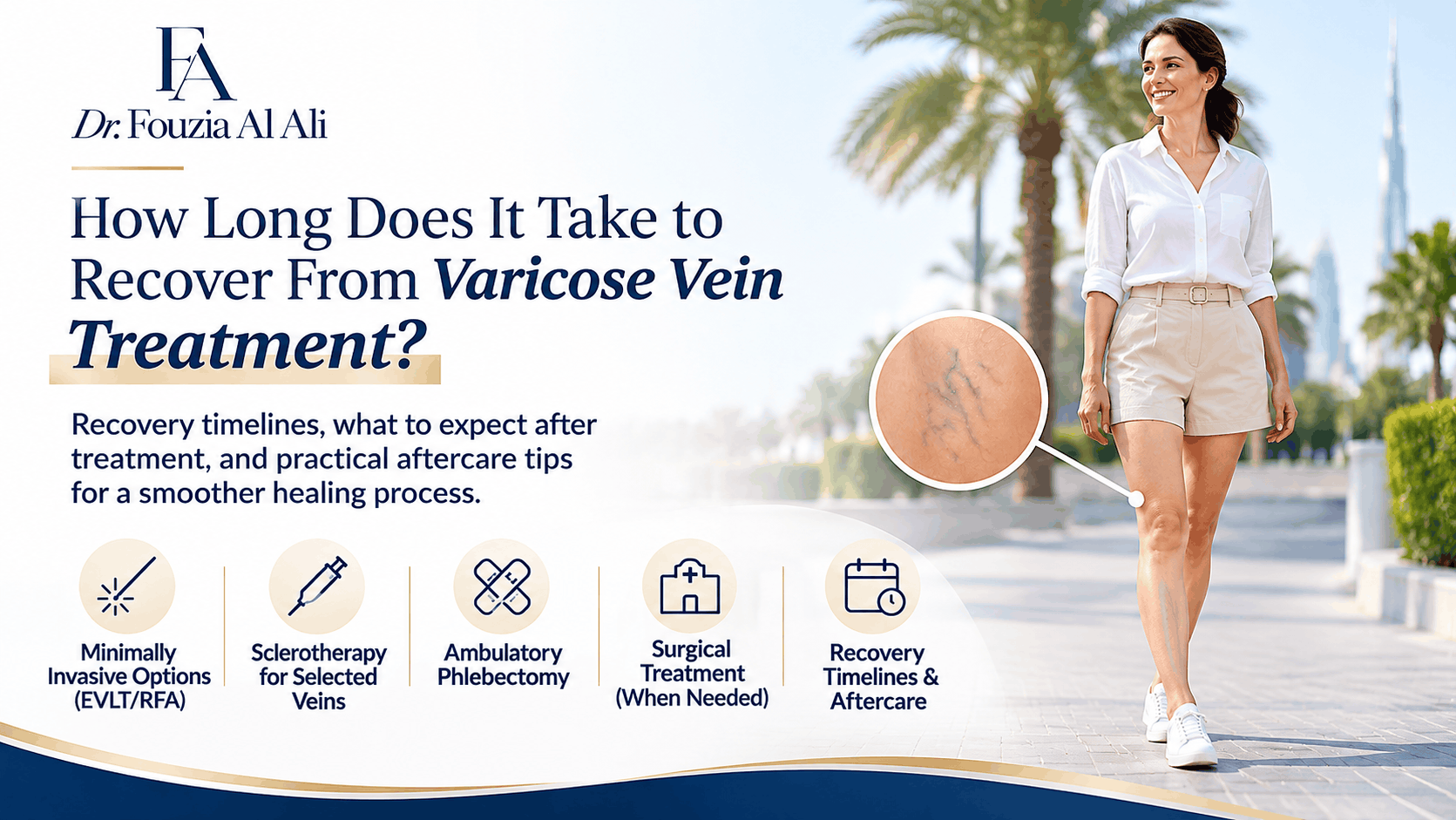
Varicose vein treatment can help relieve symptoms such as aching, heaviness and swelling, while improving the appearance of prominent veins. One of the most common questions patients ask before treatment is: How long does it take to recover from varicose vein treatment ?
The answer depends on the procedure, the extent of the vein problem, your general health and your clinician’s aftercare instructions. Many people can return to light daily activities soon after minimally invasive treatments, while bruising, tenderness or a feeling of tightness may take days or weeks to settle. Recovery after surgery may take longer.
Knowing what to expect can help you plan work, exercise and follow-up appointments. This guide from Dr. Fawezya explains typical vein treatment recovery time, post-treatment care and symptoms that require medical attention.
What Is the Typical Varicose Vein Treatment Recovery Time?
Recovery varies according to the treatment used. The timelines below are general estimates, not guarantees. Your treating clinician should provide guidance based on your procedure and individual circumstances.
Treatment
Typical recovery considerations
Endovenous laser treatment (EVLT/EVLA)
Many people resume routine activities within a day or two; bruising or tenderness may last longer
Radiofrequency ablation (RFA)
Often allows an early return to light activity; temporary soreness, bruising or tightness may occur
Sclerotherapy
Most people continue normal activities soon afterwards; bruising and local tenderness may persist for days or weeks
Ambulatory phlebectomy
Recovery depends on the number and extent of veins treated; bruising and soreness may last for several weeks
Traditional vein surgery
Recovery may take longer, depending on the operation and individual healing
These treatments are not interchangeable. Your clinician will recommend an option based on your symptoms, vein anatomy, ultrasound findings when indicated and medical history.
Recovery After Different Vein Treatments
Endovenous laser treatment
Endovenous laser treatment uses heat delivered through a catheter to close a problematic vein. It is usually performed through a small entry point rather than a large incision.
After treatment, you may notice bruising, tenderness, a pulling sensation or mild discomfort along the treated area. Many patients can walk shortly afterwards and return to light activities relatively quickly, although strenuous exercise may need to be postponed according to clinical instructions.
Radiofrequency ablation
Radiofrequency ablation also closes an affected vein using heat, but it uses radiofrequency energy. Recovery is often similar to that after endovenous laser treatment.
Temporary bruising, tenderness or tightness can occur. Walking is commonly encouraged, while the timing of more intense exercise and other activities should follow the clinician’s advice.
Sclerotherapy
Sclerotherapy involves injecting a solution into selected veins to close them. It is commonly used for smaller varicose veins or certain residual veins after another procedure.
Most people can resume ordinary activities soon after treatment. Bruising, temporary pigmentation, tenderness or small areas of firmness may occur and can take time to resolve. The number of sessions required depends on the extent and pattern of the veins.
Ambulatory phlebectomy
Ambulatory phlebectomy removes selected superficial varicose veins through small skin openings. It may be performed alone or alongside another procedure.
Recovery depends on how many veins are removed and the extent of treatment. Bruising and soreness are common initially and may gradually improve over several weeks. Your clinician will advise when to resume exercise, work and other activities.
Traditional vein surgery
Traditional procedures may involve larger incisions and more extensive treatment than minimally invasive techniques. Recovery can therefore take longer and may involve more discomfort, wound care and time away from strenuous activities.
Your surgeon will provide specific instructions about dressing care, activity, pain relief and follow-up.
What to Expect During Recovery
The first 24–48 hours
Depending on the procedure, you may experience:
- Mild pain, tenderness or tightness.
- Bruising or local swelling.
- Small areas of firmness around treated veins.
- Temporary sensitivity near the treatment site.
Walking is often encouraged after many vein procedures, but follow the instructions provided by your treating clinician. Rest when needed and avoid activities that your clinician has advised against.
The first week
Bruising and tenderness may become more noticeable before they improve. Many people can return to routine activities during this period after minimally invasive treatment, but the timing depends on the procedure and their recovery.
Contact your clinician if pain or swelling is severe, worsening or different from the symptoms you were told to expect.
The following weeks
Bruising, firmness and changes in skin colour may gradually fade. Some treated veins may take weeks or longer to become less visible as the body responds to treatment.
Follow-up appointments may be recommended to assess healing and, when indicated, check the treated veins using ultrasound.
Post-Treatment Care: How to Support Recovery
Your clinician’s instructions take priority because aftercare varies by procedure. The following measures are commonly recommended when appropriate.
Walk regularly
Gentle walking supports circulation and helps prevent prolonged immobility. Your clinician may recommend short, frequent walks soon after treatment.
Avoid prolonged sitting or standing
Change position regularly and take movement breaks. Avoid remaining still for long periods, particularly during the early recovery period.
Use compression if prescribed
Compression stockings or bandages may be recommended after certain procedures. The type and duration vary, so use them according to your clinician’s instructions. Compression is not suitable for everyone.
Elevate your legs when resting
Leg elevation may help relieve swelling or heaviness. Use a comfortable position and follow any procedure-specific instructions.
Care for the treatment site
Keep dressings and small entry sites clean and follow instructions about bathing, showering and changing dressings. Do not apply creams or other products to the treatment area unless advised.
Resume exercise gradually
Walking is often encouraged, but strenuous exercise, heavy lifting and high-impact activity may need to be restricted temporarily. Ask your clinician when it is safe to return to your usual exercise routine.
Attend follow-up appointments
Follow-up helps your clinician assess healing, review symptoms and determine whether further care is needed.
When Can You Return to Work and Exercise?
There is no single schedule that applies to everyone. Return-to-work timing depends on the procedure, the physical demands of your job and how you feel during recovery.
People with desk-based work may return sooner than those whose jobs involve heavy lifting, prolonged standing or strenuous physical activity. Ask your clinician for guidance specific to your role.
For exercise, gentle walking is commonly encouraged early after treatment. More demanding activities should be resumed gradually and only when your clinician says it is appropriate.
What Symptoms Are Normal—and Which Need Attention?
Mild bruising, tenderness and temporary swelling can occur after varicose vein treatment. These symptoms should generally improve over time.
Contact your clinician promptly if you experience:
- Increasing or severe pain.
- Worsening swelling or redness.
- Fever or signs of infection around a wound.
- Persistent bleeding from an entry site.
- New or worsening symptoms that concern you.
Seek urgent medical assessment if one leg suddenly becomes swollen, painful, warm or red, as these symptoms may indicate a deep vein thrombosis (DVT).
Sudden breathlessness, chest pain or collapse may indicate a medical emergency. Contact local emergency services immediately.
Conclusion
Varicose vein treatment recovery depends on the procedure and your individual health. Many minimally invasive treatments allow an early return to light activities, while bruising, tenderness and other temporary effects may take longer to settle. More extensive surgery may require a longer recovery period.
Following your clinician’s aftercare instructions, walking when advised, avoiding prolonged immobility and attending follow-up appointments can help support recovery. If you are considering treatment, ask your healthcare professional about the expected recovery timeline, activity restrictions and warning signs specific to your procedure.
Dr. Fawezya encourages patients to make treatment decisions after a personalised assessment and a clear discussion of expected benefits, risks and recovery.
Consultant family physician in Dubai who practises functional medicine, Calm Mind Sessions and aesthetic medicine. She l…
FAQs
1. How long does it take to recover from varicose vein treatment?
Recovery depends on the procedure. Many people return to light activities within a short period after minimally invasive treatment, while bruising and tenderness may last for days or weeks. Recovery after traditional surgery may take longer.
2. How long does bruising last after vein treatment?
Bruising often improves gradually over days to weeks. The duration depends on the procedure, the extent of treatment and individual healing. Contact your clinician if bruising is accompanied by severe or worsening pain or swelling.
3. Can I walk after varicose vein treatment?
Walking is commonly encouraged after many vein procedures, but follow your clinician’s specific instructions. They can advise how much walking is appropriate and whether any activity restrictions apply.
4. When can I return to work after vein treatment?
Some people return to desk-based work relatively soon after minimally invasive treatment. Jobs involving prolonged standing, heavy lifting or strenuous activity may require a longer recovery period. Confirm your return-to-work plan with your clinician.
5. When can I exercise after varicose vein treatment?
Gentle walking is often recommended early. The timing for running, weight training and high-impact exercise varies by procedure and recovery. Resume strenuous exercise only according to your clinician’s advice.
6. Do I need compression stockings after vein treatment?
Compression may be recommended after certain procedures, but the need and duration vary. Follow the instructions provided by your treating clinician rather than using compression for a fixed period without advice.
7. When should I contact my doctor after treatment?
Contact your clinician for severe or worsening pain, increasing swelling or redness, fever, persistent bleeding or other unexpected symptoms. Sudden one-sided leg swelling and pain require urgent assessment.