
5 MIN READ · Updated Nov 2, 2026
What Causes Leg Swelling and When Should You See a Doctor?
Leg swelling is a common problem that can affect the feet, ankles, calves or entire legs. It may develop after sitting for long periods...
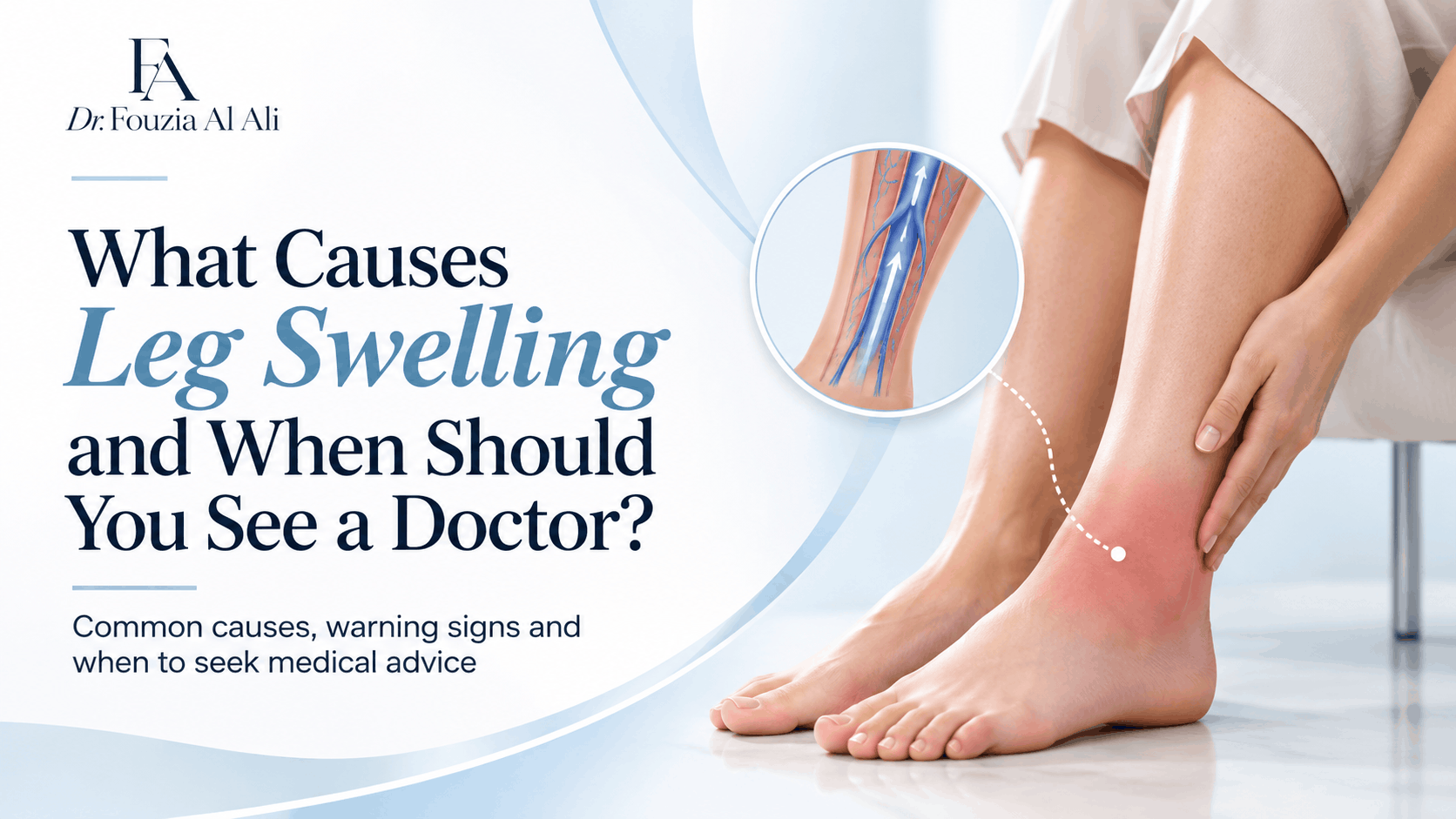
Leg swelling is a common problem that can affect the feet, ankles, calves or entire legs. It may develop after sitting for long periods, standing throughout the day, travelling or experiencing changes in fluid balance. In some cases, however, swelling may indicate an underlying medical condition that requires investigation.
Understanding the causes of leg swelling is important because the severity, duration and pattern of swelling can provide useful clues about its origin. While mild swelling that improves with movement or rest may be temporary, sudden swelling in one leg or persistent swelling accompanied by pain, redness or breathing difficulties should never be ignored.
Leg swelling occurs when excess fluid accumulates in the body's tissues. This is medically known as oedema or edema. It can develop because of problems with the veins, lymphatic system, heart, kidneys or liver, as well as certain medications and other health conditions.
Dr. Fawezya emphasises the importance of recognising changes in leg appearance, understanding associated symptoms and seeking appropriate medical assessment when necessary. Identifying the underlying cause is essential because treatment depends on the condition responsible for the swelling.
What Is Leg Edema?
Leg edema refers to swelling caused by an abnormal accumulation of fluid in the tissues of the lower limbs. It commonly affects the ankles and feet, although swelling may extend into the calves or thighs.
In some cases, pressing a finger gently against the swollen area leaves a temporary indentation. This is known as pitting edema. In other cases, the tissue feels firm, and pressing the skin may not leave a visible indentation.
Leg edema is a symptom rather than a disease in itself. It may occur because fluid is not returning efficiently through the veins, the lymphatic system is not draining properly, or the body is retaining excess fluid.
The location and timing of swelling can help a healthcare professional investigate its cause. For example, swelling that affects both ankles after prolonged standing may have a different explanation from sudden swelling in one painful leg.
Although some cases are temporary, persistent leg swelling should be evaluated, particularly when it has no clear explanation or is accompanied by other symptoms.
What Are the Common Causes of Leg Swelling?
The causes of leg swelling range from temporary fluid accumulation to conditions affecting circulation or major organs. Understanding these possibilities can help you recognise when medical advice may be necessary.
1. Poor Venous Circulation and Venous Insufficiency
One of the important causes of leg swelling is chronic venous insufficiency, a condition in which the veins have difficulty returning blood from the legs towards the heart.
Healthy veins contain valves that help blood move upwards and prevent it from flowing backwards. When these valves become weak or damaged, blood can collect in the lower limbs, increasing pressure inside the veins.
This pressure can cause fluid to move into surrounding tissues, resulting in swelling around the ankles and feet.
Common symptoms of venous insufficiency include:
- Swelling that becomes more noticeable towards the end of the day.
- A feeling of heaviness or aching in the legs.
- Visible varicose veins.
- Brownish discolouration around the ankles.
- Itching or skin irritation.
- In advanced cases, wounds that heal slowly.
Swelling associated with venous insufficiency may improve when the legs are elevated, although this does not eliminate the underlying condition.
A healthcare professional may recommend a clinical examination and duplex ultrasound to assess the veins and identify abnormal blood flow.
2. Prolonged Sitting or Standing
Remaining in one position for extended periods can contribute to temporary swelling in the lower limbs.
When you sit or stand for long periods without moving, the calf muscles are less active. These muscles normally help push blood through the veins towards the heart. Reduced movement can allow fluid to accumulate around the ankles and feet.
This may occur during long journeys, desk-based work, extended standing shifts or periods of reduced mobility.
Swelling related to prolonged sitting or standing often improves with walking, changing position or elevating the legs.
However, not every episode of swelling should be attributed to inactivity. If swelling persists, repeatedly returns or affects only one leg, a medical assessment may be necessary to exclude more significant causes.
During long periods of sitting, regular movement and gentle ankle exercises can support circulation. People with a history of blood clots or other medical conditions should follow their healthcare professional's advice about travel and mobility.
3. Deep Vein Thrombosis
Deep vein thrombosis (DVT) is a condition in which a blood clot forms in a deep vein, usually in the leg. It is one of the more serious conditions that can cause sudden, unexplained swelling.
A clot may partially or completely obstruct blood flow, causing fluid and pressure to build up in the affected limb.
Possible symptoms include:
- Sudden swelling in one leg.
- Pain or tenderness in the calf or thigh.
- Warmth in the affected area.
- Redness or changes in skin colour.
- New discomfort when standing or walking.
DVT can occur after prolonged immobility, surgery, hospitalisation or certain illnesses. Other risk factors include previous blood clots, pregnancy, some hormone treatments and certain cancers.
Not everyone with DVT experiences obvious symptoms, and leg swelling alone cannot confirm the diagnosis.
Sudden swelling in one leg, particularly with pain, warmth or redness, requires urgent medical assessment. Do not massage the affected leg or wait for the swelling to disappear.
If you experience sudden breathlessness, chest pain, coughing up blood or collapse alongside suspected DVT, seek emergency medical attention immediately. These symptoms may indicate a pulmonary embolism, in which a blood clot travels to the lungs.
4. Heart Conditions
Certain heart conditions can cause fluid to accumulate in the legs and other parts of the body.
When the heart cannot pump blood effectively, pressure may increase within the venous system. The body may also retain additional salt and water, contributing to swelling.
This can occur in heart failure and some other cardiovascular conditions.
Possible symptoms include:
- Swelling in both ankles or lower legs.
- Breathlessness during activity or while lying down.
- Unusual tiredness or reduced exercise tolerance.
- Rapid weight gain caused by fluid accumulation.
- Abdominal swelling in some cases.
These symptoms do not necessarily mean that someone has heart failure, but a combination of leg swelling and breathing difficulties deserves medical attention.
New or worsening swelling in both legs should be assessed, especially in someone with a known heart condition.
Severe breathlessness, chest pain, fainting or other signs of acute illness require emergency care.
5. Kidney Problems
The kidneys regulate fluid balance and remove waste products from the blood. When kidney function is impaired, the body may retain excess fluid and salt.
This can contribute to swelling in the feet, ankles and legs. Some kidney conditions can also cause protein to leak into the urine, reducing the amount of protein in the bloodstream and encouraging fluid to accumulate in tissues.
Other symptoms may include changes in urination, fatigue, nausea or swelling around the eyes. However, kidney disease can sometimes develop without obvious early symptoms.
If you experience persistent leg swelling alongside changes in urination, unexplained fatigue or other new symptoms, consult a healthcare professional.
Assessment may involve blood tests, urine tests, blood pressure measurements and other investigations depending on the suspected cause.
Treatment focuses on the underlying kidney problem and may include medication or changes to fluid and salt intake under medical supervision.
6. Liver Disease
Certain liver conditions can contribute to swelling in the lower limbs.
The liver produces albumin, a protein that helps maintain fluid within blood vessels. When advanced liver disease reduces albumin production, fluid can move more easily into surrounding tissues.
Liver disease can also increase pressure in the veins supplying the liver, contributing to fluid accumulation in the abdomen and sometimes the legs.
Possible symptoms include:
- Swelling in both legs or ankles.
- Abdominal enlargement caused by fluid accumulation.
- Unusual tiredness.
- Yellowing of the skin or eyes.
- Easy bruising in some cases.
These symptoms can have several causes, and their presence alone does not establish a diagnosis.
Persistent leg swelling accompanied by abdominal swelling, jaundice or other unexplained changes should be medically evaluated.
7. Lymphatic System Problems
The lymphatic system helps drain excess fluid from tissues and supports the body's immune functions. When this system becomes damaged or does not drain fluid effectively, swelling known as lymphoedema or lymphedema may develop.
Lymphatic problems can be present from birth or develop later in life. They may occur after certain surgeries, cancer treatments, infections or injuries that affect lymphatic vessels or lymph nodes.
Symptoms can include:
- Swelling in one or both legs.
- A feeling of heaviness or tightness.
- Thickening or hardening of the skin over time.
- Difficulty fitting into shoes or clothing.
- Recurrent skin infections in some cases.
Early lymphoedema may leave an indentation when pressed, while longstanding swelling can become firm and less likely to leave a visible indentation.
A healthcare professional can assess the pattern of swelling and determine whether lymphatic dysfunction or another condition is responsible.
Management may include specialist-guided compression, exercise, skin care and lymphatic drainage techniques when appropriate.
8. Medication Side Effects
Some medicines can cause fluid retention or contribute to leg edema.
Examples include certain blood pressure medications, anti-inflammatory medicines, corticosteroids and some hormone treatments. Some medicines used for diabetes or other chronic conditions can also contribute to swelling.
The likelihood of this side effect depends on the medication, dose and individual health circumstances.
If swelling begins after starting a new medicine or changing a dose, discuss the timing with your prescribing clinician or pharmacist.
Do not stop a prescribed medication or change its dose without professional advice. The healthcare professional can assess whether the medicine is responsible and consider appropriate alternatives if necessary.
9. Injury, Inflammation or Infection
An injury to the foot, ankle or leg can cause localised swelling as the body responds to tissue damage. Sprains, fractures and muscle injuries may be accompanied by pain, bruising and difficulty moving the affected area.
Infections can also cause swelling, warmth, redness and tenderness. A skin infection such as cellulitis may spread and sometimes cause fever or a general feeling of illness.
The pattern of swelling can provide clues. For example, swelling confined to an injured ankle may have a different cause from swelling affecting both legs.
Seek prompt medical assessment if swelling follows a significant injury, prevents you from bearing weight or is accompanied by severe pain.
Increasing redness, spreading warmth, fever or rapidly worsening symptoms may indicate infection and require urgent assessment.
10. Pregnancy and Hormonal Changes
Swelling in the feet and ankles is relatively common during pregnancy, particularly later in pregnancy. Changes in blood volume, hormonal influences and pressure from the growing uterus can affect fluid distribution and venous return.
Mild swelling that develops gradually in both feet may be related to these normal changes.
However, sudden or marked swelling, especially when accompanied by a severe headache, visual disturbances, pain below the ribs or feeling very unwell, requires urgent maternity assessment because it can be associated with pre-eclampsia.
Pregnancy also increases the risk of blood clots. Sudden swelling, pain or tenderness in one leg requires urgent medical evaluation.
Do not assume that all pregnancy-related swelling is harmless. Contact your maternity care team when the swelling is new, pronounced or accompanied by other concerning symptoms.
What Is Persistent Leg Swelling?
Persistent leg swelling is swelling that does not resolve as expected, remains present for an extended period or repeatedly returns without an obvious explanation.
It may affect one leg or both and can fluctuate throughout the day. In some cases, it improves after rest but returns when a person stands or sits for prolonged periods.
Persistent leg swelling may be associated with:
- Chronic venous insufficiency.
- Lymphatic system disorders.
- Heart, kidney or liver conditions.
- Medication-related fluid retention.
- Reduced mobility.
- Other underlying medical conditions.
The duration of swelling alone cannot identify its cause. The pattern, associated symptoms, medical history and examination findings all help guide diagnosis.
If swelling persists for several days without an obvious explanation, repeatedly returns or gradually worsens, arrange a medical appointment. Seek urgent care sooner if there are warning signs such as one-sided swelling, significant pain, redness, warmth or breathing difficulties.
When Should You See a Doctor for Leg Swelling?
Knowing when to seek medical attention can help you avoid delays in diagnosis.
Arrange a Medical Appointment If:
- Swelling does not improve or repeatedly returns.
- Your ankles or legs become swollen without a clear explanation.
- You notice varicose veins alongside persistent swelling.
- The skin around your ankles becomes discoloured, itchy or thickened.
- Swelling develops after starting a new medication.
- You have a known heart, kidney, liver or vascular condition and notice a change in symptoms.
Your doctor can determine whether further investigation is necessary and whether you need referral to a vascular specialist or another clinician.
Seek Urgent Medical Assessment If:
- One leg becomes suddenly swollen.
- Swelling is accompanied by calf or thigh pain.
- The affected area is warm, red or tender.
- Swelling develops rapidly or becomes significantly worse.
- You have a painful, swollen leg and a history of blood clots.
These symptoms may indicate DVT or another condition that requires prompt investigation.
Seek Emergency Care If:
- You experience sudden or severe difficulty breathing.
- Leg swelling occurs alongside chest pain or collapse.
- You develop severe breathlessness with new or rapidly worsening swelling.
- A swollen leg becomes suddenly cold, pale, numb or severely painful.
These symptoms may indicate a serious medical emergency. Do not delay emergency assessment to arrange a routine appointment.
How Is Leg Swelling Diagnosed?
The diagnosis depends on the suspected cause and the pattern of symptoms.
A healthcare professional may ask when the swelling started, whether it affects one or both legs, whether it changes during the day and whether you have other symptoms such as pain, breathlessness or changes in urination.
The examination may include checking skin colour and temperature, assessing swelling, examining pulses and reviewing your medical history and medications.
Further investigations may include:
Duplex ultrasound: This scan assesses blood flow through the veins and may help identify DVT, venous reflux or other vascular problems.
Blood tests: These may help assess kidney function, liver function, blood protein levels and other possible causes. Additional tests may be recommended when a heart condition is suspected.
Urine tests: These can help identify protein loss or other abnormalities associated with kidney disease.
Heart investigations: Depending on the symptoms, a clinician may recommend an electrocardiogram, echocardiogram or other tests to assess heart function.
Not everyone needs all these investigations. Testing is selected according to the clinical assessment and the conditions that need to be considered.
How Is Leg Edema Treated?
Treatment depends on the underlying cause rather than swelling alone.
Lifestyle Measures
For mild swelling associated with prolonged sitting or standing, movement and leg elevation may help.
Helpful measures can include regular walking, changing position frequently and avoiding long periods of immobility. Reducing excessive salt intake may be appropriate for some people, depending on their medical circumstances.
However, these measures should not replace assessment when swelling is unexplained, persistent or accompanied by concerning symptoms.
Compression Therapy
Compression stockings or other compression treatments may help manage swelling caused by certain venous or lymphatic conditions.
They are not suitable for every patient. Significant arterial circulation problems, certain skin conditions and other medical factors can affect whether compression is safe.
A healthcare professional should advise whether compression is appropriate and determine the suitable type and pressure.
Medication and Treatment of Underlying Conditions
When swelling is associated with heart, kidney or liver disease, treatment focuses on managing the underlying condition.
In selected circumstances, a clinician may prescribe diuretics, which help the body remove excess fluid. These medicines are not suitable for every cause of leg swelling and should only be used under medical supervision.
If a medicine is contributing to swelling, the prescriber may review the treatment plan.
Swelling caused by DVT requires specific medical management. Do not try to treat suspected blood clots with massage, exercise or compression without appropriate clinical guidance.
Specialist Treatment
Persistent swelling caused by venous insufficiency or lymphatic dysfunction may benefit from specialist assessment.
Depending on the diagnosis, treatment may include procedures for venous reflux, specialist compression programmes, lymphatic therapy or other targeted interventions.
The goal is to address the underlying cause, improve symptoms and reduce the risk of complications.
Can Leg Swelling Be Prevented?
Not all cases of leg swelling can be prevented, particularly when they are related to an underlying medical condition. However, certain habits may help reduce swelling associated with inactivity or venous circulation problems.
- Move regularly throughout the day.
- Avoid remaining seated or standing in one position for prolonged periods.
- Elevate your legs when resting if this helps relieve mild swelling.
- Follow medical advice about fluid and salt intake if you have a chronic condition.
- Take prescribed medicines as directed and report possible side effects.
- Follow recommended care plans for heart, kidney, liver or vascular conditions.
- Seek medical advice for swelling that is new, persistent or worsening.
Avoid taking diuretics or starting compression therapy without guidance when the cause of swelling is unknown.
Conclusion
Understanding the causes of leg swelling can help you recognise when a symptom may require medical attention. Temporary swelling can develop after prolonged sitting or standing, but persistent leg swelling may be associated with venous insufficiency, lymphatic disorders, medication side effects or conditions affecting the heart, kidneys or liver.
The pattern of swelling and any accompanying symptoms are important. Sudden swelling in one leg, particularly with pain or warmth, requires urgent assessment because it may indicate deep vein thrombosis. Breathlessness, chest pain or collapse requires emergency care.
Dr. Fawezya encourages patients to seek appropriate medical advice when swelling does not resolve, repeatedly returns or occurs alongside other unexplained symptoms. Identifying the underlying cause is the most important step towards selecting suitable treatment and protecting long-term health.

Consultant family physician in Dubai who practises functional medicine, Calm Mind Sessions and aesthetic medicine. She l…
FAQs
1. What are the most common causes of leg swelling?
Common causes include prolonged sitting or standing, chronic venous insufficiency, medication side effects, injuries and fluid retention. Swelling may also be associated with heart, kidney, liver or lymphatic conditions. The pattern and accompanying symptoms help determine the likely cause.
2. What is leg edema?
Leg edema is the accumulation of excess fluid in the tissues of the lower limbs. It can cause swelling in the feet, ankles, calves or thighs. It is a symptom rather than a diagnosis, and treatment depends on the underlying cause.
3. Why are both my legs swollen?
Swelling in both legs may be associated with venous insufficiency, prolonged inactivity, medication effects, lymphatic problems or fluid retention related to heart, kidney or liver conditions. Persistent or unexplained swelling should be assessed by a healthcare professional.
4. Why is only one leg swollen?
Swelling in one leg can result from an injury, infection, venous insufficiency or a blood clot. Sudden, unexplained swelling, especially when accompanied by pain, warmth or redness, requires urgent medical assessment to exclude DVT.
5. When is persistent leg swelling dangerous?
Persistent leg swelling may indicate an underlying condition that needs treatment. Sudden one-sided swelling, severe pain, redness or warmth requires urgent assessment. Swelling accompanied by chest pain, sudden breathlessness or collapse requires emergency care.
6. Can poor circulation cause swollen legs?
Yes. Problems with venous circulation can increase pressure in the leg veins, allowing fluid to accumulate in surrounding tissues. Chronic venous insufficiency may cause ankle swelling, heaviness, varicose veins and skin changes.
7. Can kidney problems cause leg edema?
Yes. Kidney dysfunction can lead to fluid and salt retention, contributing to swelling in the legs and other areas. Kidney conditions can also cause protein loss that affects fluid balance. Medical assessment and appropriate tests are needed to determine the cause.
8. Can heart problems cause swelling in the ankles?
Yes. Some heart conditions, including heart failure, can contribute to fluid accumulation in the legs and ankles. Swelling alongside breathlessness, fatigue or rapid fluid-related weight gain should be medically assessed. Severe breathing difficulties or chest pain require emergency care.
9. How can I reduce mild leg swelling at home?
If swelling is mild and clearly associated with prolonged sitting or standing, gentle walking, regular movement and leg elevation may help. However, sudden, unexplained or persistent swelling should not be managed only with home remedies.
10. Do compression stockings help with leg swelling?
Compression stockings may help selected patients with venous or lymphatic conditions. They are not suitable for everyone, particularly some people with significant arterial circulation problems. Seek professional advice about whether compression is appropriate.
11. Can medication cause persistent leg swelling?
Yes. Certain blood pressure medicines, anti-inflammatory drugs, corticosteroids and hormone treatments can contribute to swelling. If swelling begins after starting a medicine, discuss it with your prescriber rather than stopping the medication yourself.
12. Which doctor should I see for swollen legs?
A primary care doctor is often an appropriate starting point for unexplained or persistent swelling. Depending on the suspected cause, you may need assessment by a vascular specialist, cardiologist, kidney specialist or another clinician. Sudden one-sided swelling or symptoms suggesting a blood clot require urgent medical assessment.