
5 MIN READ · Updated Nov 4, 2026
Can Varicose Veins Come Back After Treatment?
Varicose vein treatment can reduce symptoms and improve the appearance of affected veins. However, some people notice new or returning visible veins months or years after treatment...
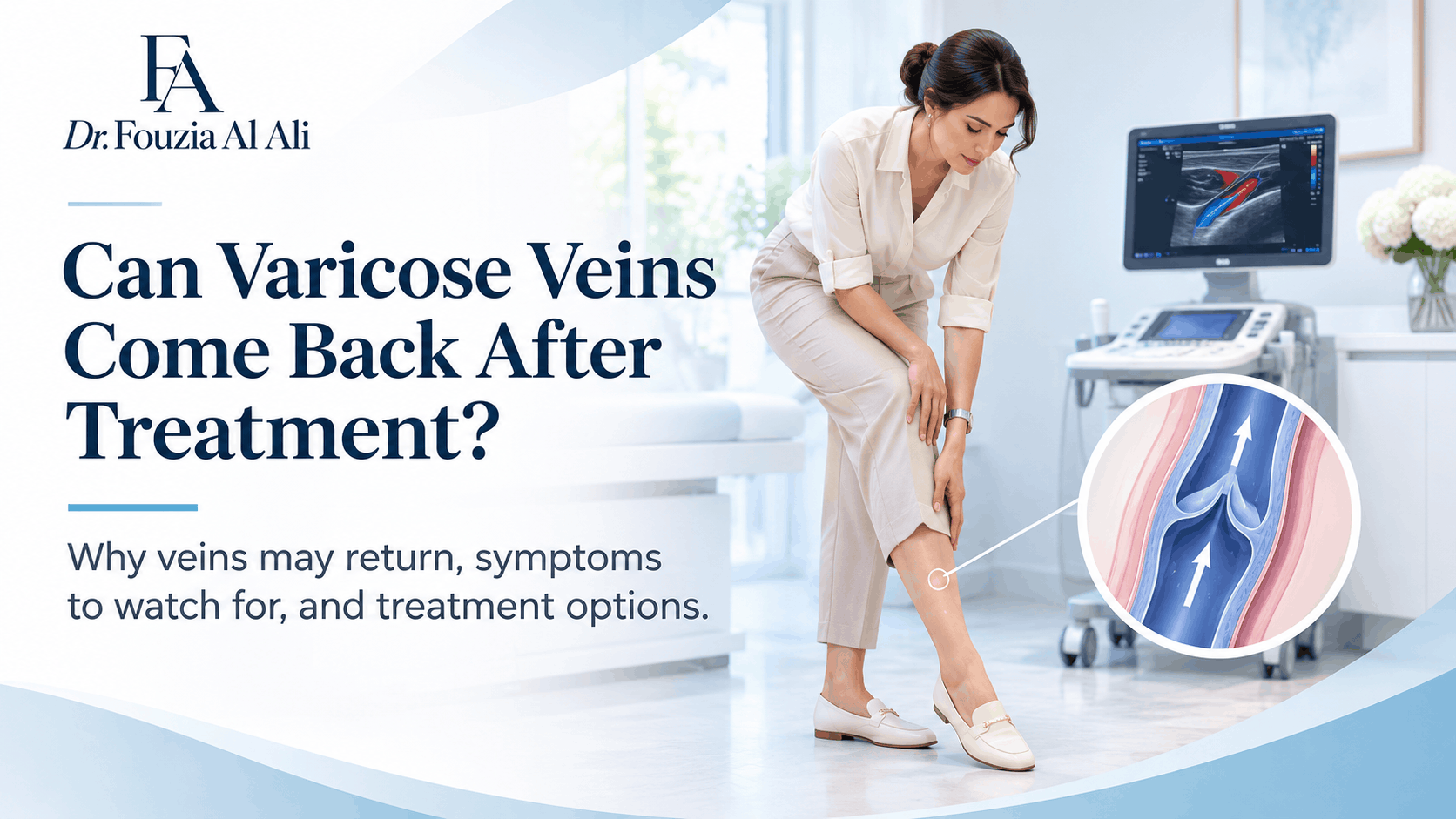
Varicose vein treatment can reduce symptoms and improve the appearance of affected veins. However, some people notice new or returning visible veins months or years after treatment and wonder: can varicose veins come back after treatment?
Yes.Varicose veins can recur, even after a successful procedure. Treatment closes or removes the veins that are causing problems, but it cannot eliminate a person's underlying tendency to develop venous disease. New veins may become enlarged, previously treated veins may reopen, or untreated veins may become problematic over time.
The return of visible veins does not necessarily mean the original treatment failed. Understanding why recurrence happens, recognising symptoms and arranging an appropriate assessment can help guide the next steps.
Why Can Varicose Veins Come Back After Treatment?
There are several reasons why recurrent varicose veins may develop. The cause can differ depending on the original treatment, the anatomy of the veins and how the condition progresses over time.
1. New veins become affected
Varicose veins are often associated with weakened vein walls or valves that do not close effectively. Treatment can address specific problem veins, but it cannot prevent every other vein from developing valve dysfunction in the future.
As a result, new varicose veins may appear in areas that were not treated previously.
2. A treated vein reopens
Some procedures aim to close a vein rather than remove it. In certain cases, the treated vein may partially or fully reopen, allowing blood to flow through it again. This is sometimes called recanalisation.
If the reopened vein develops reflux and causes symptoms or visible varicosities, further assessment may be needed.
3. Other veins were not treated initially
A person may have more than one source of venous reflux. If smaller connecting veins, tributaries or other affected segments remain, they may continue to contribute to symptoms or become more prominent later.
Some treatment plans also intentionally use staged procedures, with additional treatment considered after the initial recovery period.
4. The underlying venous disease progresses
Chronic venous disease can change over time. Even when the original treatment works as intended, other veins may gradually become affected. This is one reason why varicose veins after treatment may develop years later.
5. Pregnancy, weight changes and other risk factors
Factors that increase pressure on the veins or affect circulation may contribute to recurrence. These can include pregnancy, excess body weight, ageing, family history and prolonged periods of sitting or standing.
These factors do not guarantee recurrence, but they may influence a person's risk.
How Common Is Vein Treatment Recurrence?
Recurrence rates vary depending on how recurrence is defined, the procedure used, the patient's vein anatomy and the length of follow-up.
Some studies count a new abnormality detected by ultrasound, while others count visible veins or symptoms that return. These are different outcomes, so recurrence figures should not be interpreted as a single universal risk.
The important point is that recurrence is recognised after both surgical and minimally invasive treatments. It may occur relatively early because of persistent or reopened veins, or much later as new veins become affected.
Your clinician can explain the recurrence risks relevant to your treatment and medical history.
What Are the Signs of Recurrent Varicose Veins?
Recurrent varicose veins may look similar to the veins that were treated previously. They can appear in the same area or in a different part of the leg.
Possible signs include:
- New enlarged, twisted or bulging veins.
- Aching, heaviness or tiredness in the legs.
- Swelling around the ankles or lower legs.
- Itching or discomfort around visible veins.
- Skin discolouration, irritation or thickening near the ankles.
- Symptoms that become worse after prolonged standing.
Visible veins alone do not confirm that treatment has failed. A clinical assessment can help determine whether the changes represent recurrence, untreated veins, a new vein problem or another cause of symptoms.
How Are Recurrent Varicose Veins Diagnosed?
If varicose veins return, a healthcare professional will usually review your treatment history and assess your symptoms and leg veins.
Clinical examination
The clinician may examine the legs while you are standing and ask about pain, swelling, skin changes, previous procedures and when the veins reappeared. This helps identify the location and extent of the visible problem.
Duplex ultrasound
A venous duplex ultrasound is often used to investigate symptomatic recurrent varicose veins. It can assess blood flow, identify reflux and help determine whether a previously treated vein has reopened or another vein is contributing to the problem.
Ultrasound findings help guide treatment decisions. The best approach depends on the source of recurrence rather than simply treating the visible veins.
Can Recurrent Varicose Veins Be Treated Again?
Yes. Recurrent varicose veins can often be treated, but the appropriate method depends on the cause, anatomy, symptoms and previous procedures.
Endovenous laser or radiofrequency treatment
If recurrence is caused by reflux in a suitable vein, endovenous laser treatment or radiofrequency ablation may be considered. These procedures use heat to close the affected vein.
Sclerotherapy
Sclerotherapy involves injecting a solution into selected veins to close them. It may be suitable for certain recurrent surface veins or veins that are not appropriate for thermal treatment.
Phlebectomy
In selected cases, small incisions are used to remove problematic superficial varicose veins. This may be considered when the anatomy and clinical findings make it appropriate.
Individualised treatment planning
Recurrent veins can be more complex to treat than veins that have not previously undergone a procedure. Previous scarring, altered anatomy and the source of reflux may affect the choice of treatment.
A clinician should review the ultrasound findings and explain the benefits, risks and alternatives before recommending another procedure.
How Can You Reduce the Risk of Varicose Veins Returning?
There is no guaranteed way to prevent recurrence, particularly when genetics or progressive venous disease are involved. However, certain habits may support circulation and help manage symptoms.
Keep moving
Walking and regular calf-muscle movement help support blood flow through the leg veins. If you sit or stand for long periods, take regular movement breaks.
Maintain a healthy weight
Managing body weight, where appropriate, may reduce pressure on the veins and support overall vascular health.
Elevate your legs when appropriate
Raising your legs while resting may help relieve swelling or heaviness for some people.
Follow your clinician's aftercare advice
Follow the specific instructions provided after your procedure, including recommendations about walking, compression garments and follow-up appointments. Compression is not suitable for everyone, so seek clinical advice before using it if you have other circulation problems.
Attend follow-up when recommended
Follow-up can help assess recovery, identify persistent symptoms and determine whether additional treatment is needed. Contact your clinician if new or worsening symptoms develop after treatment.
When Should You Seek Medical Advice?
Arrange a medical assessment if you notice new or returning varicose veins, persistent leg aching, swelling, skin changes or a wound near the ankle that does not heal.
Seek urgent medical attention if one leg suddenly becomes swollen, painful, warm or red. These symptoms can indicate a deep vein thrombosis (DVT) or another condition requiring prompt assessment.
Sudden breathlessness, chest pain or collapse may indicate a medical emergency. Contact local emergency services immediately.
If a varicose vein bleeds, lie down if possible, raise the affected leg and apply firm, continuous pressure directly over the bleeding point with a clean cloth or dressing. Seek urgent medical care, especially if bleeding is heavy, does not stop or you feel faint.
Conclusion
Varicose veins can come back after treatment, but recurrence does not automatically mean the original procedure was unsuccessful. New veins may become affected, a treated vein may reopen or the underlying venous disease may progress.
If you notice recurrent varicose veins, persistent discomfort or changes in your legs, seek a professional assessment. Identifying the cause of recurrence can help determine whether monitoring, lifestyle measures or further treatment is appropriate.
Dr. Fawezya encourages patients to discuss returning symptoms with a qualified healthcare professional so that care can be based on an individual assessment and clear treatment goals.
Consultant family physician in Dubai who practises functional medicine, Calm Mind Sessions and aesthetic medicine. She l…
FAQs
1. Can varicose veins come back after laser treatment?
Yes. Varicose veins can return after laser treatment if a treated vein reopens, another vein develops reflux or the underlying venous disease progresses. An ultrasound assessment can help identify the cause.
2. How long after treatment can varicose veins recur?
Recurrence may become apparent within months or many years after treatment. The timing depends on the original vein problem, the procedure and whether new venous disease develops.
3. Does recurrence mean my varicose vein treatment failed?
Not necessarily. Treatment may have successfully closed or removed the original problem veins, while new veins become affected later. A clinical examination and, when indicated, duplex ultrasound can help distinguish recurrence from persistent disease.
4. Can recurrent varicose veins be treated more than once?
Yes. Further treatment may be possible. The clinician will assess the source of recurrence and consider options such as endovenous ablation, sclerotherapy or phlebectomy based on the individual findings.
5. Are recurrent varicose veins more difficult to treat?
They can be. Previous treatment may change the vein anatomy or cause scarring, making assessment and treatment more complex. Careful examination and ultrasound help guide planning.
6. Can lifestyle changes prevent varicose veins from returning?
Lifestyle measures such as walking regularly, avoiding prolonged immobility and managing body weight may support circulation and reduce symptoms. However, they cannot guarantee that varicose veins will not recur.
7. Should I have an ultrasound if my varicose veins return?
A duplex ultrasound is commonly recommended when recurrent varicose veins cause symptoms or when further treatment is being considered. It helps identify the source of reflux and informs treatment planning.