5 MIN READ · Updated Oct 30, 2026
Are Varicose Veins Dangerous? Warning Signs You Should Not Ignore
Varicose veins are enlarged, twisted veins that commonly appear on the legs and feet. They may look blue, purple or dark beneath the skin and can...
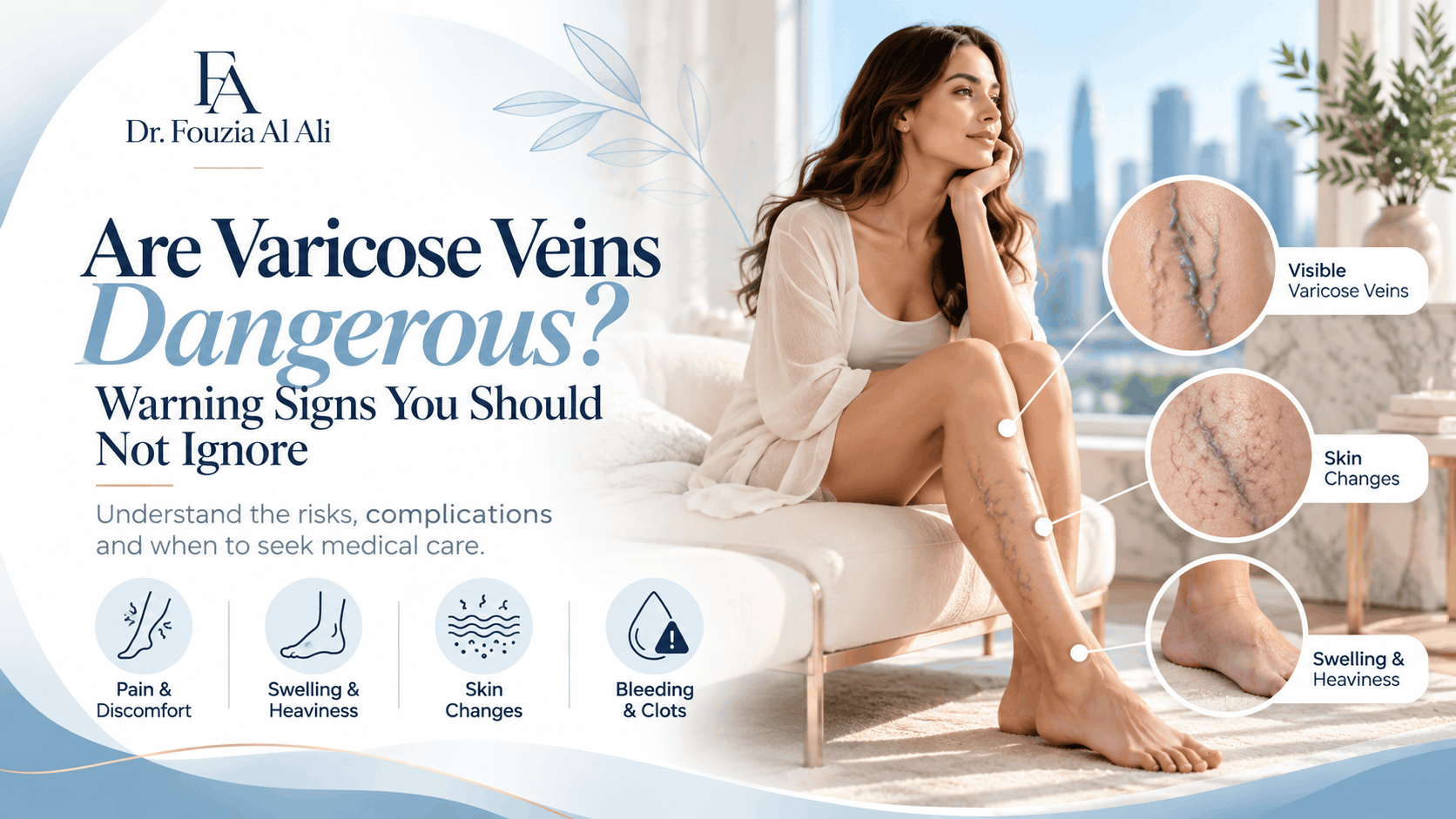
Varicose veins are enlarged, twisted veins that commonly appear on the legs and feet. They may look blue, purple or dark beneath the skin and can sometimes cause aching, heaviness, swelling or itching. For many people, varicose veins are primarily a cosmetic concern. However, in some cases, they can indicate an underlying circulation problem and lead to complications that require medical attention.
So, are varicose veins dangerous? The answer depends on the severity of the condition, the symptoms present and whether complications have developed. Many varicose veins are not immediately dangerous, but ignoring persistent symptoms, skin changes, bleeding or open wounds can delay appropriate treatment.
Understanding the warning signs can help you recognise when to seek medical advice. Some complications, such as bleeding from a varicose vein, require urgent care, while sudden leg swelling may indicate a blood clot that needs immediate assessment.
Dr. Fawezya emphasises the importance of understanding varicose vein symptoms, recognising potentially dangerous varicose veins and seeking appropriate medical guidance when changes occur. Early assessment can help identify the underlying problem and determine whether monitoring, conservative management or a specialist procedure is appropriate.
What Are Varicose Veins?
Varicose veins develop when veins become enlarged, twisted and visible beneath the skin. They most frequently affect the legs because the veins in the lower limbs must return blood to the heart against gravity.
Inside healthy veins, small valves help blood flow in the correct direction. These valves open to allow blood to move towards the heart and close to prevent it from flowing backwards.
When the valves weaken or become damaged, blood can flow backwards and accumulate within the affected veins. This increases pressure inside the vessels, causing them to stretch and become enlarged.
This process is often associated with venous reflux and may occur as part of chronic venous insufficiency.
Varicose veins can appear as raised, rope-like vessels on the calves, thighs or around the knees. Some people experience no discomfort, while others develop symptoms that affect walking, standing, sleeping or everyday activities.
Although the appearance of varicose veins does not automatically indicate a serious medical problem, persistent symptoms or changes in the surrounding skin should not be ignored.
Are Varicose Veins Dangerous?
In many cases, varicose veins are not immediately dangerous. People may live with visible veins for years without experiencing significant problems. However, some develop complications because of increased pressure within the veins and changes in the surrounding tissues.
The likelihood of complications depends on several factors, including the severity of venous disease, the presence of underlying circulation problems and the individual's medical history.
Potential concerns include:
- Bleeding from veins close to the skin.
- Inflammation or blood clots in superficial veins.
- Persistent swelling and discomfort.
- Skin discolouration, irritation or thickening.
- Venous leg ulcers that heal slowly.
- Deep vein thrombosis, which may occur independently or alongside other risk factors and requires urgent assessment when suspected.
It is important to distinguish between varicose veins themselves and conditions that may cause similar symptoms. For example, sudden swelling in one leg is not something to automatically attribute to existing varicose veins, as it may indicate deep vein thrombosis.
The key is to recognise changes in symptoms and seek appropriate care rather than assuming that every visible vein is harmless or that every varicose vein requires surgery.
7 Varicose Vein Complications You Should Not Ignore
1. Bleeding From Varicose Veins
One of the more concerning varicose vein complications is bleeding.
Varicose veins located close to the skin can become fragile as the vein walls stretch and the surrounding skin becomes thinner. Even a minor injury, such as scratching or accidentally knocking the leg, may cause a vein to bleed.
Bleeding can sometimes be more substantial than expected because blood pressure within the affected vein is elevated.
If a varicose vein begins bleeding:
Lie down if possible and raise the affected leg above the level of your heart.
Apply firm, continuous pressure directly over the bleeding point using a clean cloth or dressing.
Seek urgent medical care, even if the bleeding appears to stop.
If bleeding is heavy, does not stop with firm pressure, or you feel faint or weak, contact emergency services.
Do not rely on a bandage alone without applying direct pressure.
A vein that has bled should be assessed to determine whether further treatment is needed to reduce the risk of recurrence.
2. Superficial Vein Thrombosis
Superficial vein thrombosis occurs when a blood clot develops in a vein close to the surface of the skin. It can affect a varicose vein and cause inflammation in the surrounding area.
Possible symptoms include:
- Localised pain or tenderness.
- Redness along the course of a vein.
- Warmth around the affected area.
- A firm or cord-like vein beneath the skin.
- Localised swelling.
Although superficial vein thrombosis is not the same as deep vein thrombosis, it should not automatically be considered harmless. In some cases, the clot can extend towards the deeper venous system.
Seek prompt medical assessment if a vein becomes suddenly painful, hard, red or swollen. A healthcare professional may recommend an ultrasound scan to establish the extent of the problem and determine appropriate treatment.
Do not attempt to treat a suspected blood clot by massaging the affected area.
3. Deep Vein Thrombosis
Deep vein thrombosis, or DVT, occurs when a blood clot forms in a deep vein, usually in the leg. It is a serious condition because the clot can sometimes travel to the lungs and cause a potentially life-threatening pulmonary embolism.
Varicose veins do not mean that you have DVT, and DVT can occur in people without varicose veins. However, a history of venous disease may be relevant when assessing an individual's overall risk.
Warning signs of DVT may include:
- Sudden swelling in one leg.
- Pain or tenderness in the calf or thigh.
- Warmth in the affected leg.
- Redness or discolouration.
- New, unexplained discomfort that worsens when standing or walking.
Not everyone with DVT experiences all these symptoms. Some people may have relatively subtle signs.
If you develop sudden, unexplained swelling or pain in one leg, seek urgent medical assessment. Do not wait for the symptoms to disappear.
Seek emergency medical attention immediately if you experience sudden breathlessness, chest pain, coughing up blood or collapse alongside suspected DVT. These may indicate a pulmonary embolism.
4. Skin Discolouration and Venous Eczema
Long-standing venous insufficiency can affect the skin around the ankles and lower legs.
When pressure within the veins remains elevated, fluid and blood components may leak into the surrounding tissues. This can lead to inflammation, irritation and changes in skin pigmentation.
Common changes include:
- Brownish or reddish discolouration around the ankles.
- Dry, itchy or flaky skin.
- Persistent irritation or an eczema-like rash.
- Thickening or hardening of the skin.
- Swelling that becomes more noticeable later in the day.
These changes may develop gradually, so they can be overlooked until they become uncomfortable or extensive.
Persistent skin changes associated with varicose veins deserve medical assessment. Appropriate management may help control inflammation, address venous pressure and reduce the risk of further skin damage.
Avoid assuming that every rash or discoloured patch is caused by varicose veins, as other skin conditions may produce similar symptoms.
5. Venous Leg Ulcers
A venous leg ulcer is an open wound that develops when chronic venous disease damages the skin and underlying tissues. These ulcers commonly occur around the ankles and may take a long time to heal.
They can develop when prolonged venous pressure contributes to swelling, inflammation and impaired tissue repair.
Warning signs may include:
- An open sore that does not heal.
- Moist or weeping skin around the wound.
- Swelling in the lower leg or ankle.
- Brownish skin discolouration.
- Discomfort or tenderness around the affected area.
Venous ulcers require professional assessment because treatment may involve wound care, management of venous insufficiency and compression therapy when appropriate.
Compression should be selected according to the individual's condition, particularly when arterial circulation problems are possible.
Seek urgent care if an ulcer develops spreading redness, increasing pain, significant discharge or other signs of infection. Fever or feeling seriously unwell alongside a worsening wound also requires prompt medical attention.
6. Persistent Pain, Swelling and Reduced Mobility
Not all dangerous varicose veins cause sudden or dramatic symptoms. In some cases, the main problem is persistent discomfort that gradually affects quality of life.
People may experience aching, heaviness, throbbing or swelling after prolonged standing. Symptoms may improve when the legs are elevated but return during daily activities.
Over time, these symptoms can make it more difficult to stand at work, walk comfortably, exercise or participate in usual activities.
Persistent swelling can also contribute to skin irritation and other complications if the underlying venous problem remains untreated.
A medical assessment can help determine whether the symptoms are caused by venous insufficiency or another condition, such as a musculoskeletal disorder, nerve problem or a different circulation issue.
Treatment may focus on controlling symptoms, improving daily function and addressing the underlying vein problem when appropriate.
7. Recurrent Inflammation and Changes in Vein Appearance
Varicose veins may become increasingly prominent or develop areas of tenderness and inflammation.
A previously stable vein that becomes suddenly painful, hard or red may indicate superficial vein thrombosis or another complication. New swelling or rapidly changing symptoms should not automatically be attributed to ordinary varicose veins.
Recurrent inflammation, skin breakdown or bleeding may indicate that the condition needs more detailed assessment.
A healthcare professional can examine the affected area and determine whether duplex ultrasound or another investigation is needed.
The appearance of a vein alone cannot reliably establish whether it is dangerous. Changes in symptoms, the surrounding skin and the overall clinical picture are important.
What Are the Warning Signs of Dangerous Varicose Veins?
Knowing which symptoms require immediate attention can help prevent delays in care.
Arrange a medical assessment if you experience persistent aching, recurring swelling, itching, skin discolouration, or a wound that does not heal.
Seek urgent medical attention if a vein becomes suddenly painful, red, hard or swollen, or if one leg develops unexplained swelling.
Certain symptoms require emergency care rather than a routine appointment.
For bleeding from a varicose vein, raise the leg, apply firm direct pressure and obtain urgent medical care.
For sudden swelling and pain in one leg, seek urgent assessment for possible DVT.
In cases of sudden breathlessness, chest pain or collapse, contact emergency services immediately.
For a painful, red, hard vein, seek prompt medical assessment for possible superficial vein thrombosis.
For persistent skin changes or a non-healing ulcer, arrange medical assessment and appropriate wound care.
For severe bleeding that does not stop with pressure, contact emergency services immediately.
These recommendations are general guidance. The urgency of assessment may depend on the severity of symptoms and your medical history.
Who Is More Likely to Develop Varicose Vein Complications?
Several factors can increase the likelihood of developing varicose veins or experiencing complications associated with chronic venous disease.
Family History
People with a family history of varicose veins may have an increased likelihood of developing them because inherited characteristics can influence vein walls and valve function.
Increasing Age
Vein walls and valves may become less effective with age, increasing the likelihood of venous reflux and associated symptoms.
Pregnancy
Hormonal changes, increased blood volume and pressure from the growing uterus can increase pressure in the leg veins. Some pregnancy-related varicose veins improve after delivery, although they may persist.
Prolonged Standing or Sitting
Long periods without movement can aggravate venous symptoms, particularly in people who already have impaired valve function.
Excess Body Weight
Excess body weight may increase pressure on the lower-limb venous system and contribute to symptoms.
Previous Venous Disease
A history of DVT or other vein damage may increase the likelihood of ongoing circulation problems and requires consideration during assessment.
Having one or more of these factors does not mean that complications will definitely occur. However, recognising them can help you understand when symptoms deserve further investigation.
How Are Varicose Veins Diagnosed?
A clinical assessment helps establish whether your symptoms are associated with varicose veins, chronic venous insufficiency or another condition.
Your healthcare professional may ask when the symptoms began, whether they worsen after standing, whether you have a family history of vein disease and whether you have previously experienced blood clots.
The examination may include checking the appearance of the veins, looking for swelling or skin changes and assessing the affected limb.
Duplex Ultrasound
Duplex ultrasound is commonly used when further investigation of varicose veins is required.
It combines ultrasound imaging with an assessment of blood flow. The scan can help identify:
- Reflux caused by poorly functioning vein valves.
- The veins involved in the abnormal blood flow.
- Evidence of a blood clot when thrombosis is suspected.
- The anatomy of the veins before treatment.
The findings help guide decisions about monitoring, conservative management or a procedure.
Not every person with visible varicose veins requires the same investigations. The need for testing depends on symptoms, examination findings and the suspected condition.
What Treatment Options Are Available for Varicose Veins?
The most suitable varicose vein treatment depends on the severity of symptoms, the presence of complications and the results of clinical investigations.
1. Lifestyle Changes
Regular walking activates the calf muscles and supports the movement of blood towards the heart. Changing position regularly, avoiding prolonged periods of immobility and elevating the legs when resting may help reduce discomfort and swelling.
These measures can improve symptom management but do not usually eliminate established varicose veins.
2. Compression Therapy
Compression stockings apply controlled pressure to the legs and may help reduce swelling and discomfort in selected patients.
They do not repair damaged valves or permanently remove varicose veins. The appropriate compression level should be determined according to the individual's condition, especially if arterial circulation problems are possible.
3. Endovenous Laser Treatment and Radiofrequency Ablation
These minimally invasive procedures use heat delivered through a catheter to close an affected vein.
They are commonly used for suitable patients with symptomatic varicose veins associated with venous reflux. The choice depends on ultrasound findings and individual clinical factors.
4. Sclerotherapy
Sclerotherapy involves injecting a solution into selected veins to make them close over time.
It may be suitable for smaller varicose veins, spider veins or certain larger veins when ultrasound-guided techniques are appropriate.
5. Surgery
Surgical techniques may be considered in selected cases when other approaches are unsuitable or when the clinical circumstances support surgery.
A specialist can explain the expected benefits, potential risks, recovery period and alternative options before treatment.
Treatment is not necessary for every visible vein. The decision should be based on the patient's symptoms, examination findings and preferences after a discussion of the available options.
Can Varicose Vein Complications Be Prevented?
Not every complication can be prevented, but certain habits may support circulation and help manage symptoms.
- Walk regularly and remain physically active within your abilities.
- Avoid sitting or standing in one position for prolonged periods.
- Move your ankles and legs during long periods of sitting.
- Maintain a healthy weight where possible.
- Elevate your legs when resting if this helps reduce swelling.
- Follow medical advice if you have a history of DVT or chronic venous insufficiency.
- Seek assessment for persistent skin changes, bleeding or wounds that do not heal.
If you have already developed varicose veins, these measures should complement rather than replace appropriate medical evaluation.
Consultant family physician in Dubai who practises functional medicine, Calm Mind Sessions and aesthetic medicine. She l…
FAQs
1. Are varicose veins dangerous if they do not hurt?
Varicose veins without pain are often not an immediate cause for concern. However, some people develop skin changes or other complications without significant discomfort. Seek medical advice if you notice bleeding, swelling, discolouration or wounds that do not heal.
2. What are the most dangerous varicose vein complications?
Important complications include bleeding, superficial vein thrombosis, chronic skin damage and venous ulcers. Deep vein thrombosis and pulmonary embolism are serious conditions that may cause similar or overlapping symptoms and require urgent assessment when suspected.
3. Can varicose veins cause blood clots?
Blood clots can develop in superficial varicose veins, causing pain, redness and a firm, tender vein. Deep vein thrombosis affects deeper veins and is a separate, potentially serious condition. Sudden swelling or pain in one leg requires urgent medical assessment.
4. When should I worry about varicose vein symptoms?
You should seek medical advice for persistent pain, swelling, itching, skin changes or wounds that do not heal. Sudden leg swelling, a painful hard vein or bleeding requires urgent assessment. Chest pain, sudden breathlessness or collapse requires emergency care.
5. Can varicose veins cause leg ulcers?
Yes. Chronic venous insufficiency can lead to inflammation and damage to the skin, sometimes resulting in venous ulcers around the ankles. These wounds require professional assessment and appropriate wound management.
6. Is bleeding from a varicose vein an emergency?
Bleeding requires immediate first aid. Lie down, raise the affected leg and apply firm, continuous pressure directly to the bleeding point. Obtain urgent medical care. If bleeding is heavy, does not stop or causes faintness, contact emergency services.
7. Can varicose veins become worse over time?
Yes. Some varicose veins remain relatively stable, while others become more prominent or develop pain, swelling and skin changes. Progression varies between individuals, so persistent or worsening symptoms should be assessed.
8. Do all varicose veins require surgery?
No. Some cases can be managed with observation and lifestyle measures. Others may benefit from compression therapy, minimally invasive procedures or surgery. The most appropriate option depends on symptoms, ultrasound findings and the severity of venous disease.
9. Can walking help prevent varicose vein complications?
Walking activates the calf muscles and supports blood flow through the veins. It may help manage heaviness and swelling, but it cannot guarantee prevention of complications or repair damaged vein valves.
10. Should I see a doctor for varicose veins that suddenly become painful?
Yes. Sudden pain, redness, warmth or hardening of a vein may indicate superficial vein thrombosis or another problem. Seek prompt medical assessment, particularly if one leg also becomes swollen. Do not massage the affected area.
11. Are varicose veins a sign of poor circulation?
Varicose veins indicate an abnormality in the superficial venous system, often involving valve dysfunction and backward blood flow. They do not necessarily indicate poor arterial circulation, which is a different problem affecting the delivery of blood to tissues.
12. Can treatment completely prevent varicose veins from returning?
Treatment can close or remove affected veins, but it cannot eliminate every underlying risk factor. New varicose veins may develop, and some treated veins may reopen. Follow-up depends on the treatment used and the individual's condition.